

The Race
The organized yacht racing classes around Annapolis, including inshore one-design fleets and offshore ocean racing divisions, hold significant historical importance as they trace back to the late 19th century with the founding of the Annapolis Yacht Club in 1886, evolving into formal regattas by the 1930s and post-World War II revival in 1946 with classes like 30 Square Meters, Stars, and Chesapeake 20s, while the biennial Annapolis-to-Newport Race since 1947 has cemented the region’s role in American offshore sailing heritage and international competition.

The Final Leg
In terms of racing yacht design, inshore classes such as the Star (a 22-foot keelboat with a fin keel, bulb weight for stability, and oversized mainsail for upwind performance) and J/22 (a 22-foot planing hull with fractional rig and asymmetric spinnaker for agile handling) prioritize fairness and speed in protected waters, whereas ocean racing yachts for events like Annapolis-to-Newport emphasize seaworthiness with features like deep or canting keels, reinforced carbon-fiber hulls, and large sail plans optimized for variable Atlantic conditions under handicap rules like ORC.
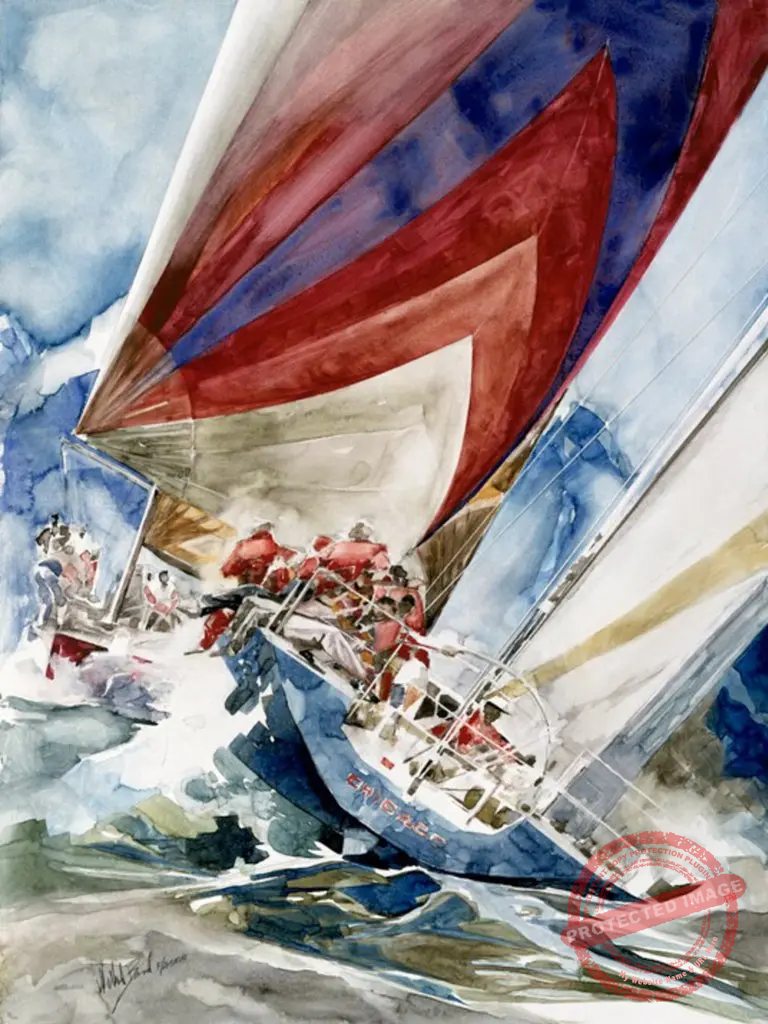
As a source of interest for artists, these racing classes’ dramatic action, elegant silhouettes, and scenic Chesapeake-to-ocean transitions have inspired marine painters such as Willard Bond and John M. Barber, who capture the intensity of regattas and the beauty of sail against dynamic seascapes in oils, watercolors, and prints to preserve maritime culture.
About The Author
