
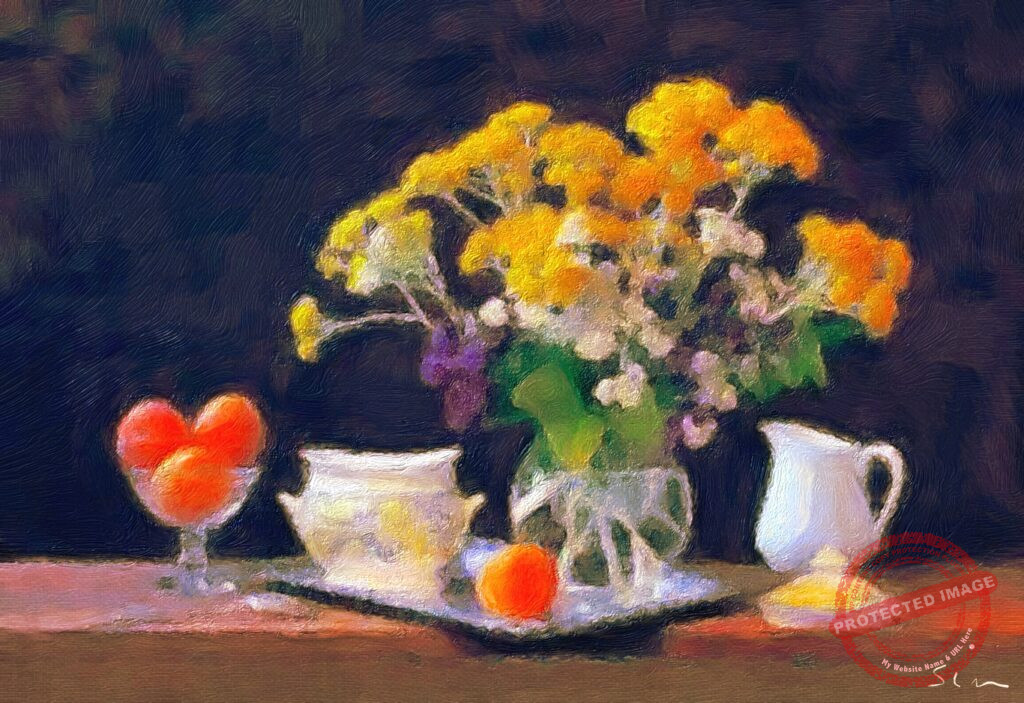
In still life painting, light, color, and shadows are fundamental elements that create depth, realism, and emotional resonance. Artists manipulate these to transform ordinary objects—such as fruits, flowers, or everyday items—into compelling compositions.
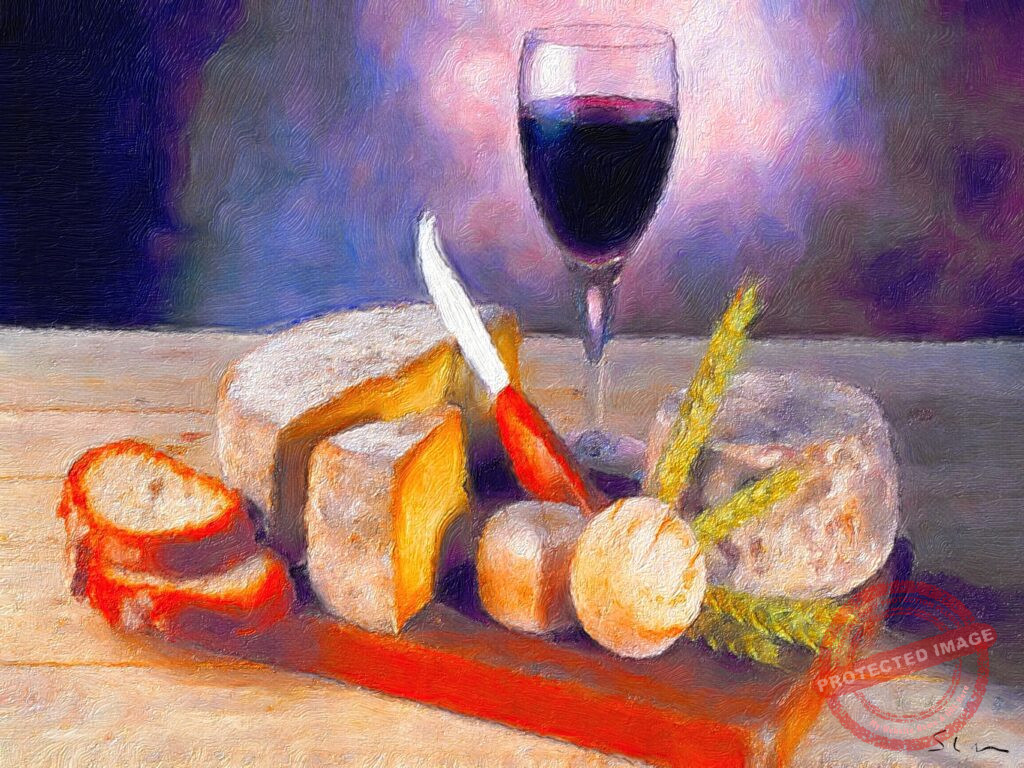
Light typically comes from a single source, illuminating parts of the scene while casting shadows that define form and volume. Colors in illuminated areas appear vibrant and saturated, while those in shadow become cooler, desaturated, and darker, reflecting how light interacts with surfaces. This contrast, often through techniques like chiaroscuro (strong light-dark opposition), adds drama and three-dimensionality.
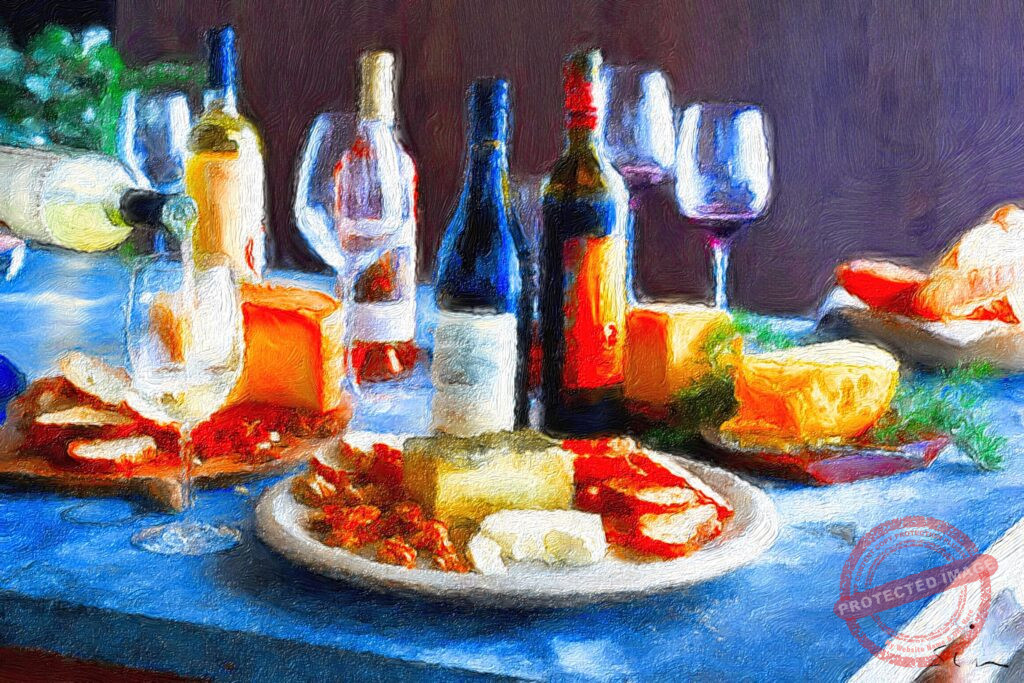
For instance, a warm light source (like sunlight) produces subtle cool shadows with blue-violet tones, influenced by the surface color below. Shadows aren’t just black voids; they carry hints of complementary colors to avoid flatness—e.g., a red apple’s shadow might mix burnt sienna with ultramarine blue for warmth and depth. This relativity enhances the illusion: brighter hues dominate in light, while shadows mute intensity, guiding the viewer’s eye and evoking mood, from serene to ominous.
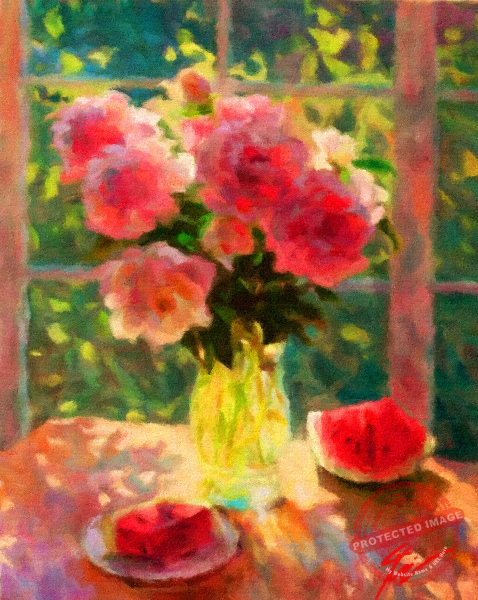
Mastering these elements requires observing references closely, as shadows “embrace” the composition, lifting subjects from the background for lifelike presence.
About The Author
