

Monticello Spring
Monticello, the neoclassical plantation home designed and continually refined by Thomas Jefferson over more than four decades, holds profound historical relevance as the residence of America’s third president, principal author of the Declaration of Independence, and a key Founding Father whose Enlightenment ideals shaped the nation’s founding principles. As a UNESCO World Heritage Site, it symbolizes both the aspirations of the young republic through its classical architecture inspired by ancient Rome and Renaissance Italy.

Reflections at Monticello
Monticello’s beauty and allure for artists stem from Jefferson’s innovative blend of functionality and aesthetics, featuring a domed roof, symmetrical facades, and meticulously planned gardens that harmonize with the Virginia landscape, inspiring countless painters, photographers, and designers with its timeless elegance and as a canvas for exploring themes of innovation, nature, and human ingenuity.

Jefferson Memorial Blossoms
The Jefferson Memorial in Washington, D.C., holds profound historical relevance as a tribute to Thomas Jefferson, the third U.S. President and principal author of the Declaration of Independence, symbolizing the foundational principles of American democracy, liberty, and enlightenment ideals that shaped the nation. Dedicated in 1943 amid World War II, its neoclassical design—modeled after the Roman Pantheon and Jefferson’s own architectural preferences—commemorates his roles in the Louisiana Purchase, the Lewis and Clark expedition, and advocating for religious freedom and education. For artists, the memorial’s allure lies in its breathtaking beauty: the gleaming white marble dome rising gracefully over the Tidal Basin, offering stunning reflections in the water, especially during cherry blossom season when pink petals frame the scene like a living painting; its symmetrical columns and the 19-foot bronze statue of Jefferson inside inspire photographers, painters, and sculptors with dramatic lighting at dawn or dusk, evoking timeless themes of harmony between human achievement and nature.

Alba al Duomo di Milano
The Duomo di Milano, or Milan Cathedral, stands as a monumental testament to Italy’s Gothic architectural heritage and the city’s historical prominence as a center of power, faith, and innovation during the Renaissance and beyond; begun in 1386 under the auspices of Archbishop Antonio da Saluzzo and the ruling Visconti family, its construction spanned over five centuries, involving luminaries like Leonardo da Vinci in advisory roles, and culminated in 1965, symbolizing Milan’s resilience through wars, plagues, and political upheavals while housing relics like the Holy Nail from the Crucifixion and serving as a coronation site for Italian kings.
For artists, its allure lies in the breathtaking magnificence of over 3,400 statues, 135 gargoyles, and intricate marble facades that shift dramatically with the light, inspiring photographers to capture its ethereal glow at sunset, painters to render the labyrinthine rooftop spires against the Alpine backdrop, and sculptors to emulate its fusion of divine aspiration and human craftsmanship, making it an eternal muse for evoking grandeur and spiritual transcendence.
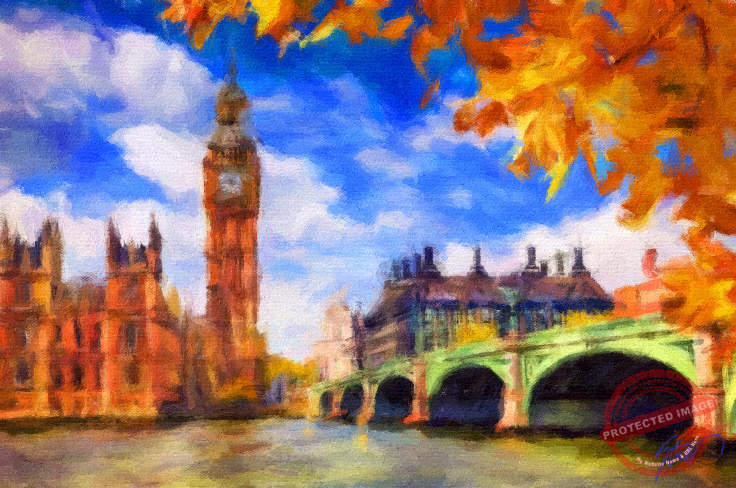
Westminster Bridge and Tower
The Westminster Bridge and Clock Tower, now known as the Elizabeth Tower housing the iconic Big Ben bell, embody profound historical significance as symbols of British parliamentary democracy and Victorian engineering prowess; the bridge, originally built in 1750 and rebuilt in 1862 to accommodate growing traffic across the Thames, has witnessed pivotal events from royal processions to wartime resilience during the Blitz, while the tower, completed in 1859 as part of the rebuilt Palace of Westminster after the 1834 fire, features the world’s most accurate four-faced striking clock at the time and commemorates Queen Victoria’s Diamond Jubilee renaming in 2012. For artists, their allure stems from the majestic
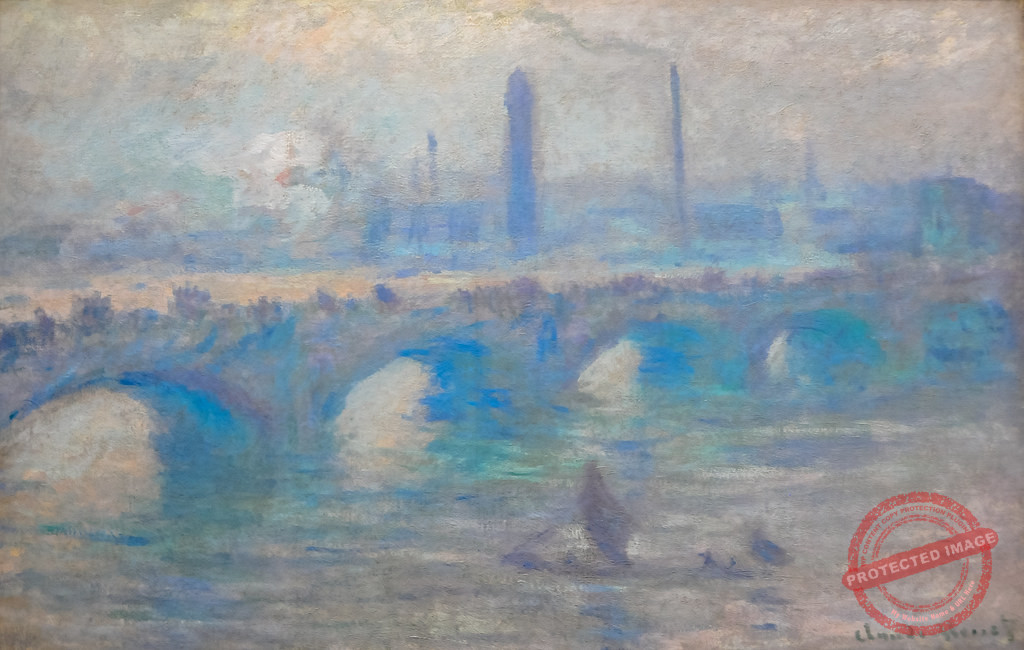
Gothic Revival architecture piercing London’s skyline, with the tower’s illuminated clock faces glowing ethereally at twilight and the bridge offering panoramic vistas of the river’s reflective waters, inspiring masters like Claude Monet to capture its foggy, impressionistic haze in series of paintings, photographers to frame its symmetry against bustling urban life, and filmmakers to evoke timeless drama and romance in countless scenes.
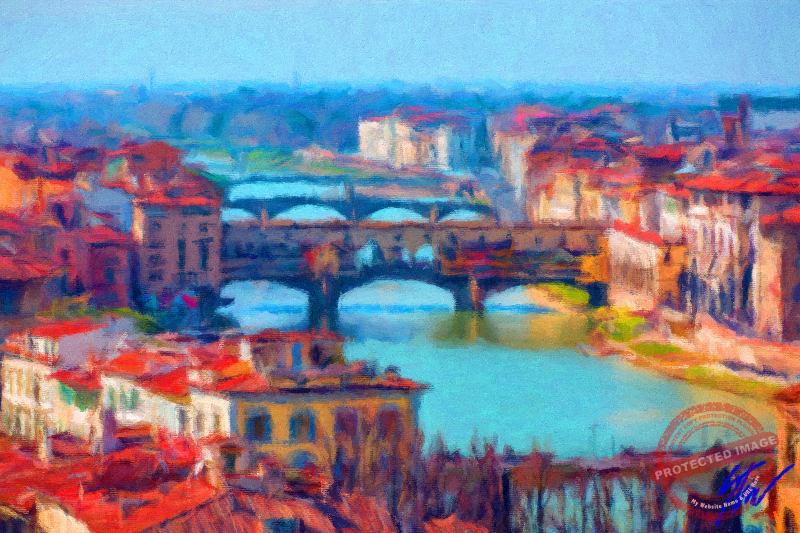
Ponte Vechio
The Ponte Vecchio, Florence’s iconic medieval bridge spanning the Arno River, holds immense historical significance as the city’s oldest surviving bridge, originally constructed in Roman times but rebuilt in 1345 after devastating floods, symbolizing resilience through centuries of wars, plagues, and natural disasters; spared destruction by retreating German forces in World War II on Hitler’s orders, it evolved from housing butchers to goldsmiths and jewelers under Medici rule in the 16th century, reflecting Italy’s Renaissance opulence and trade prowess while serving as a vital link in the Vasari Corridor connecting the Uffizi to the Pitti Palace.
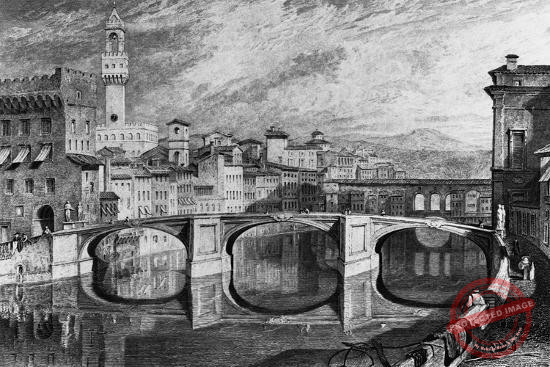
For artists, its allure lies in the timeless magnificence of its segmented arches, overhanging shops glowing with golden wares, and shimmering reflections in the river’s waters, especially at dusk when the setting sun bathes it in warm hues, inspiring luminaries like J.M.W. Turner and countless photographers to capture its romantic, fairy-tale essence as a harmonious blend of architecture, history, and natural beauty.
About The Author
